
- English
- Español
- Português
- русский
- Français
- 日本語
- Deutsch
- tiếng Việt
- Italiano
- Nederlands
- ภาษาไทย
- Polski
- 한국어
- Svenska
- magyar
- Malay
- বাংলা ভাষার
- Dansk
- Suomi
- हिन्दी
- Pilipino
- Türkçe
- Gaeilge
- العربية
- Indonesia
- Norsk
- تمل
- český
- ελληνικά
- український
- Javanese
- فارسی
- தமிழ்
- తెలుగు
- नेपाली
- Burmese
- български
- ລາວ
- Latine
- Қазақша
- Euskal
- Azərbaycan
- Slovenský jazyk
- Македонски
- Lietuvos
- Eesti Keel
- Română
- Slovenski

What Makes CNC Machining Service Essential for Modern Manufacturing?
CNC machining service has become the backbone of precision manufacturing across industries such as aerospace, automotive, medical devices, and electronics. This comprehensive guide explores how CNC machining works, its advantages, applications, cost factors, material choices, and how to select the right service provider. Whether you're a startup or an established manufacturer, this article addresses key pain points such as quality consistency, turnaround time, and cost control while offering practical solutions.
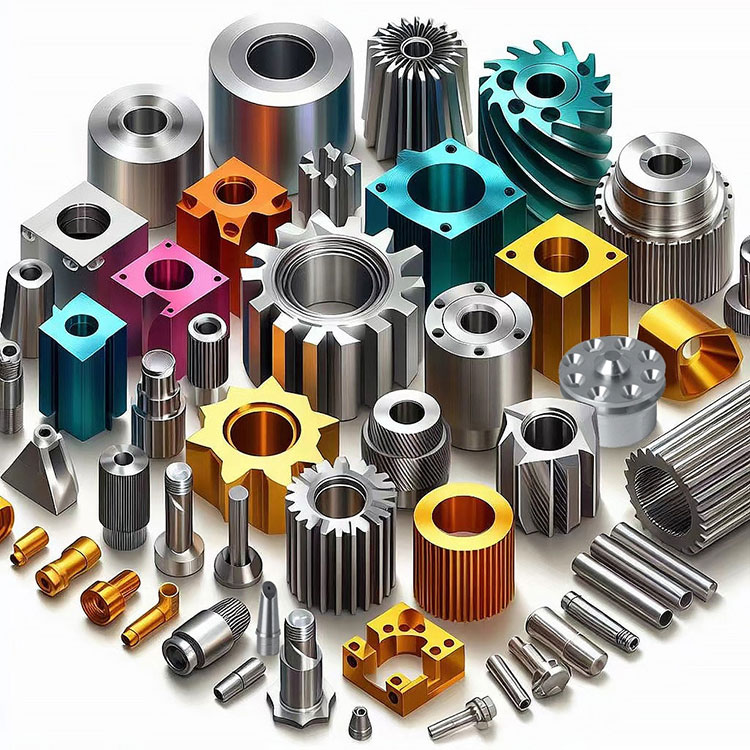
Table of Contents
- 1. Introduction
- 2. What Is CNC Machining Service?
- 3. How CNC Machining Works
- 4. Key Benefits of CNC Machining Service
- 5. Industry Applications
- 6. Materials Used in CNC Machining
- 7. Cost Factors Explained
- 8. Common Challenges and Solutions
- 9. How to Choose the Right CNC Machining Service Provider
- 10. CNC Machining vs Traditional Manufacturing
- 11. Future Trends in CNC Machining
- 12. FAQ
1. Introduction
Precision, efficiency, and scalability are critical in modern manufacturing. CNC machining service plays a vital role in meeting these demands. Companies across the globe rely on CNC technology to produce highly accurate components with minimal waste and reduced lead times. However, choosing the right service and understanding the process can be challenging.
2. What Is CNC Machining Service?
CNC (Computer Numerical Control) machining service refers to a manufacturing process where pre-programmed computer software controls the movement of machinery and tools. This process enables the production of complex parts with high precision.
- Automated control of machining tools
- High repeatability and consistency
- Suitable for both prototyping and mass production
3. How CNC Machining Works
The CNC machining process typically involves several steps:
- Design creation using CAD software
- Conversion to CAM instructions
- Machine setup and tool selection
- Automated machining process
- Quality inspection and finishing
4. Key Benefits of CNC Machining Service
| Benefit | Description |
|---|---|
| High Precision | Achieves tolerances as tight as ±0.001 mm |
| Efficiency | Reduces production time significantly |
| Consistency | Ensures identical parts in large batches |
| Flexibility | Handles complex geometries easily |
| Cost-Effective | Minimizes waste and labor costs |
5. Industry Applications
- Aerospace: Turbine blades, structural components
- Automotive: Engine parts, transmission systems
- Medical: Surgical instruments, implants
- Electronics: Enclosures, connectors
- Industrial Equipment: Custom machinery parts
6. Materials Used in CNC Machining
CNC machining supports a wide range of materials:
| Material Type | Examples | Key Properties |
|---|---|---|
| Metals | Aluminum, Steel, Titanium | Strength, durability |
| Plastics | ABS, Nylon, PEEK | Lightweight, corrosion-resistant |
| Composites | Carbon Fiber | High strength-to-weight ratio |
7. Cost Factors Explained
Understanding cost drivers helps optimize your budget:
- Material selection
- Part complexity
- Production volume
- Surface finishing requirements
- Lead time expectations
Tip: Simplifying design and choosing standard materials can significantly reduce costs.
8. Common Challenges and Solutions
| Challenge | Solution |
|---|---|
| High initial cost | Use prototyping services before scaling |
| Design complexity | Optimize CAD models for manufacturability |
| Material waste | Choose efficient machining strategies |
| Lead time delays | Partner with reliable suppliers |
9. How to Choose the Right CNC Machining Service Provider
- Check experience and expertise
- Evaluate equipment and technology
- Review quality control processes
- Assess customer support and communication
- Compare pricing and turnaround times
Choosing a reliable partner ensures long-term success and product quality.
10. CNC Machining vs Traditional Manufacturing
| Aspect | CNC Machining | Traditional Methods |
|---|---|---|
| Precision | Very High | Moderate |
| Labor Requirement | Low | High |
| Production Speed | Fast | Slower |
| Customization | Highly Flexible | Limited |
11. Future Trends in CNC Machining
- Integration with AI and automation
- Smart factories and IoT connectivity
- Advanced materials processing
- Sustainable manufacturing practices
The future of CNC machining lies in smarter, faster, and more sustainable production methods.
12. FAQ
Q1: What industries benefit most from CNC machining service?
A: Aerospace, automotive, medical, and electronics industries benefit the most due to precision requirements.
Q2: Is CNC machining suitable for small batch production?
A: Yes, it is ideal for both prototyping and small batch production.
Q3: How accurate is CNC machining?
A: CNC machining can achieve extremely tight tolerances, often within microns.
Q4: What is the typical lead time?
A: Lead times vary depending on complexity but can range from a few days to several weeks.
Q5: Can CNC machining handle complex designs?
A: Absolutely. It excels at producing intricate and highly detailed components.
Conclusion
CNC machining service is a cornerstone of modern manufacturing, offering unmatched precision, efficiency, and versatility. By understanding the process, benefits, and selection criteria, businesses can make informed decisions that improve product quality and reduce costs.
KwongTo Electronic Technology Co.,Ltd is committed to delivering high-quality CNC machining solutions tailored to your needs. Whether you require rapid prototyping or large-scale production, our expert team is ready to support your project.
Contact us today to discuss your requirements and discover how we can help bring your ideas to life.
Previous:No News